Jun 26, 2026Market Insights
Africa Snapshot: Pet Ownership, Feeding Behaviors, and Market Trends Across a Rapidly Emerging Region
Pet ownership is widespread across Africa, yet cost pressures and limited awareness continue to leave much of the market underdeveloped. According to Sagaci Research, 29% of Africans aged 18+ own pet
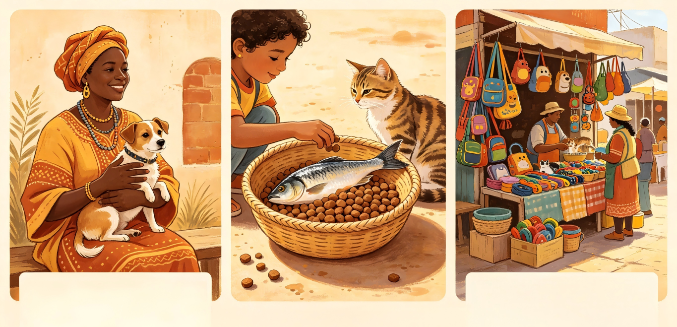
Pet ownership is widespread across Africa, yet cost pressures and limited awareness continue to leave much of the market underdeveloped. According to Sagaci Research, 29% of Africans aged 18+ own pets, revealing a sizable but still largely untapped consumer base.
Ownership rates vary significantly by country. Madagascar leads with over 40%, followed by Angola (39%), South Africa (38%), Kenya (38%), and Algeria (35%). These markets represent some of the strongest entry points for brands exploring African expansion.
Dogs and cats dominate African households:
- 54% of pet owners keep dogs
- 47% own cats
- 12% keep chickens
- 6% keep goats
- 6% own birds
- 4% raise rabbits
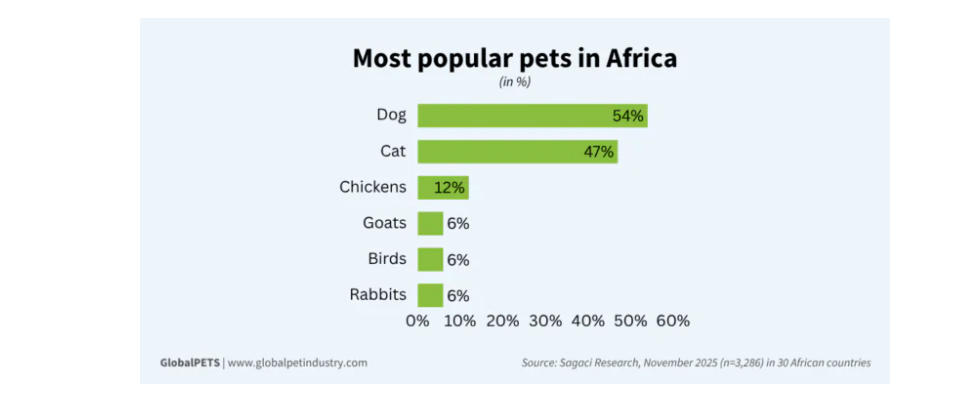
The survey, conducted in November 2025 with 11,520 respondents across 30 African countries, highlights the continent’s diverse pet‑keeping culture—including major markets such as Nigeria, Ethiopia, Egypt, the Democratic Republic of the Congo, and Tanzania.
Pet Food: Cost Pressures Shape Feeding Habits
Feeding behavior reflects the economic realities of many African households.
- 48% of pet owners rely on table scraps
- Only 41% purchase commercial pet food
- Among those who do, 64% choose kibble
Purchase frequency varies:
- 28% buy weekly
- 16% buy every two weeks
- 34% buy monthly
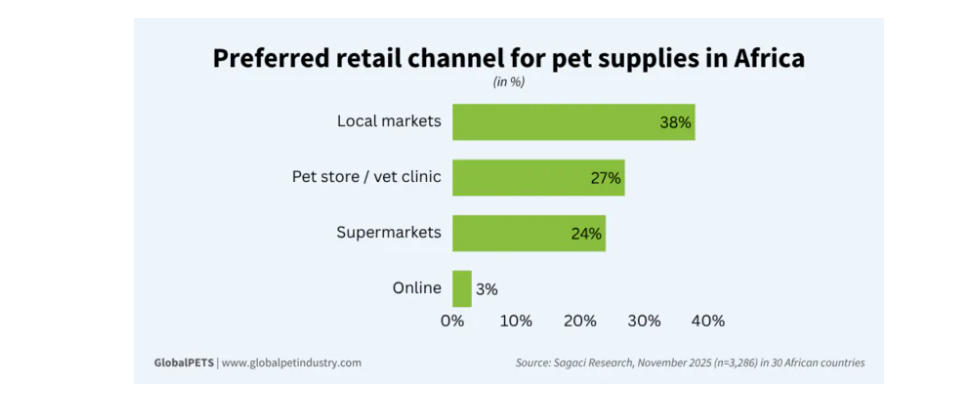
Local markets remain the dominant retail channel, used by 38% of pet owners. Pet stores and veterinary clinics account for 27%, while supermarkets represent 24%. Online purchasing remains minimal at 3%, underscoring the early stage of digital adoption.
Amazon’s launch in South Africa in May 2024 introduced new competition, but consumer preference for in‑store shopping remains a major barrier to rapid e‑commerce growth.
For brands selling functional outdoor gear—such as harnesses, leashes, and collars—these purchasing patterns highlight the importance of affordability, durability, and distribution partnerships that reach local markets rather than relying solely on online channels.
Brand Loyalty: Local Players Lead the Market
Local brands dominate Africa’s pet food landscape.
Over the 12 months ending November 2025, the top brands were Marltons and Pamper, both South African leaders in #petfood and accessories.
Other brands in the top 10 include:
- Nestlé Purina
- Montego Pet Nutrition
- Husky
- Bob Martin & Co
- Bobtail
- Beeno
- Mars Petcare’s Pedigree
- Migliorgatto
This mix of local and global brands reflects a market where affordability and accessibility often outweigh premium positioning—creating opportunities for OEM‑driven private‑label development.
Insurance Adoption: Awareness Remains Low
#Petinsurance adoption remains limited across Africa:
- Only 15% of #petowners currently hold a policy
- 25% say they plan to purchase one
- 61% have never considered it
The data highlights a major awareness gap—and a long runway for future growth as pet humanization increases.
What This Means for the Pet Industry
- Africa represents a large but underdeveloped #petmarket, with strong ownership rates but low penetration of commercial products.
- Feeding habits show that affordability remains a key barrier, but growing interest in kibble and branded products signals early‑stage premiumization.
- Local brands currently dominate, but rising demand for functional, durable, and health‑oriented products will create space for new entrants.
- Retail remains heavily offline, requiring brands to build strong local distribution networks.
- Insurance adoption is still nascent, indicating significant long‑term potential as awareness grows.
What This Means for Pet Brands Working with OEM Partners
1. The Problems Brands Are Facing
- High price sensitivity limits adoption of premium products
- Limited awareness of specialized #petcare categories
- Fragmented retail channels make scaling difficult
- Local brands dominate due to affordability and accessibility
2. What Pet Brands Now Need
- Cost‑efficient product development to meet budget‑conscious consumers
- Durable, functional designs suited for diverse climates and outdoor lifestyles
- Flexible production to support both entry‑level and mid‑tier product lines
- Localized supply chain strategies to reach markets where online penetration is low
3. How OEM Partners Create Value
OEM partners can support African market expansion by offering:
- Cost control through optimized materials and scalable production
- Flexible manufacturing for private‑label and value‑driven SKUs
- Rapid prototyping for functional gear such as harnesses, leashes, and collars
- Stable supply chains that help brands enter fragmented offline markets
For brands targeting Africa, OEM collaboration enables the creation of affordable, durable, and market‑fit products—critical for winning in a price‑sensitive but fast‑growing region.
Source: GlobalPETS