Jun 26, 2026Market Insights
Tracking Key Trends in the Global Pet Accessories Market: Spending Behavior, Category Leaders, and Shifting Consumer Expectations
Safety and durability are the top decision drivers, while Amazon and discount marketplaces continue to shape global purchasing patterns. E
A new international survey reveals that pet accessories have become a meaningful and recurring expense for many pet owners worldwide. While most consumers purchase accessories only a few times a year, their choices are increasingly shaped by budget constraints, safety concerns, and evolving shopping habits. Online marketplaces—especially major e‑commerce platforms and discount sites—now dominate the purchasing journey.
The findings highlight not only global trends but also regional differences across seven key markets: Australia, Brazil, Canada, France, Mexico, the UK, and the US.
1. Regional Purchasing Patterns: A Global Snapshot
The Yummypets (powered by Loop) and PETS International survey collected responses from 2,708 pet owners across seven countries. Most consumers buy accessories several times a year, with spending concentrated in the mid‑range but with a notable share of higher‑value purchases.
The data reveals both shared global behaviors and distinct regional nuances, offering a clearer picture of how pet parents approach accessory buying across different markets.
2. Top Dog Accessories: Toys Lead, Followed by Leashes, Collars, and Harnesses
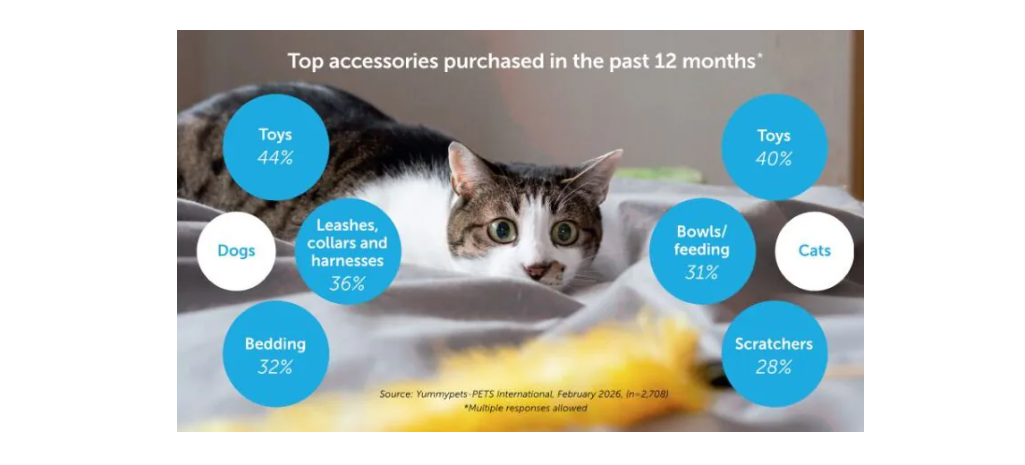
Across all markets, toys were the most commonly purchased accessory in the past 12 months:
- 44% of dog owners bought toys
- 40% of cat owners did the same
For dog owners, the second most purchased category was leashes, collars, and harnesses, with 36% of respondents selecting these items. This figure was even higher in:
- Mexico: 45%
- Australia: 43%
Other leading dog accessories include:
- Bedding (blankets, beds): 32%
- Grooming tools (brushes, combs): 31%
- Particularly popular in Brazil (40%) and Mexico (39%)
These trends reinforce the importance of functional outdoor gear—such as harnesses, leashes, and cooling products—especially as safety and durability become top priorities for pet parents.
3. Cat Accessories: Feeding Items, Scratchers, and Grooming Tools Dominate
Cat owners showed different preferences:
- Bowls & feeding accessories: 31%
- Scratchers: 28%
- Grooming tools (brushes, nail cutters): 24%
The US stands out as a high‑activity market, surpassing global averages in six categories, including:
- Toys: 50%
- Scratchers: 36%
- Cat trees & climbing furniture: 28%
- Bedding: 26% (also high in the UK at 27%)
This indicates strong demand for enrichment and lifestyle products among American cat owners.
4. What Drives Purchase Decisions? Safety and Durability Come First
Two factors dominate consumer decision‑making:
1. Pet Safety — 72%
Safety is especially important in:
- Brazil: 78%
- France & UK: 76%
- Canada: 75%
2. Product Quality & Durability — 71%
US consumers place even more emphasis here: 76%.
Other considerations include:
- Price: 60% (higher in Brazil 65%, Australia 64%, US & Canada 63%)
- Design/aesthetics: 23%
- Reviews/ratings: 23%
- Sustainability: 17%
- Brand reputation: 9%
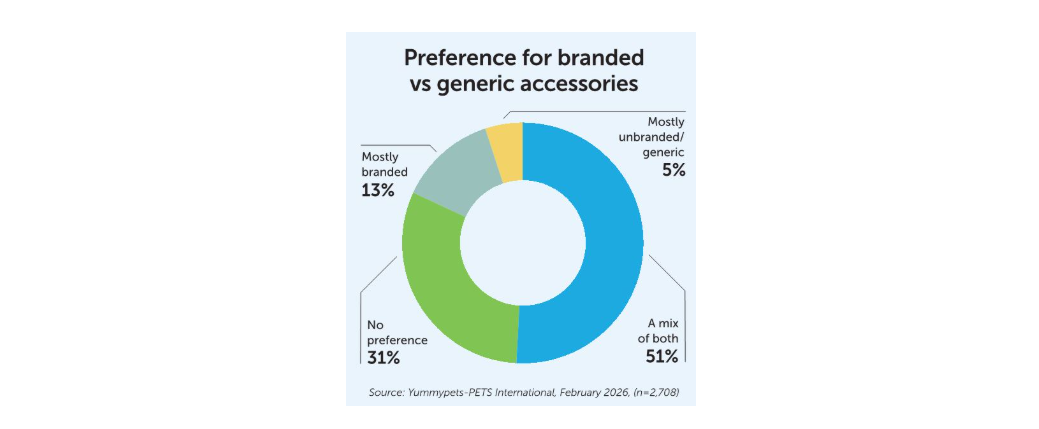
Interestingly, 51% of owners buy a mix of branded and generic items, while only 13% prefer mostly branded products.
This reinforces a key insight: functionality and safety matter far more than branding, creating strong opportunities for private‑label and OEM‑produced accessories.
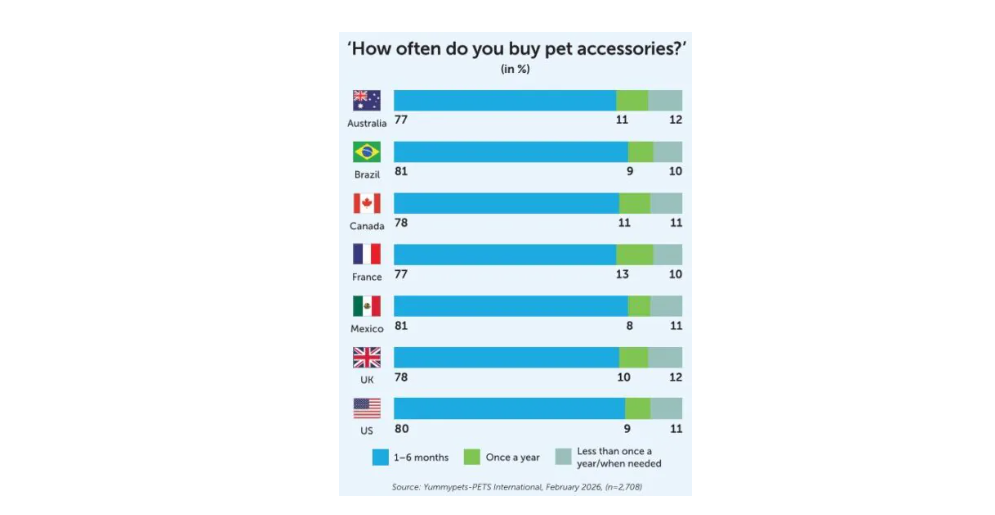
5. Shopping Frequency: Occasional Purchases Dominate, but a Large “Frequent Buyer” Segment Exists
Most pet owners buy accessories occasionally, but the breakdown shows meaningful variation:
- 41% shop several times a year
- Higher in France & Mexico: 44%
- 38% buy more than once every three months
- Higher in Brazil & Canada: 41%
- 10% buy once a year
- 3% buy less than once a year
- 8% only buy when replacement is necessary
This mix of occasional and frequent shoppers highlights the importance of both seasonal launches and evergreen essentials.
6. Accessories as Gifts: Treat or Necessity?
Globally, 51% of pet parents view accessories as an “occasional treat,” especially in:
- France: 59%
- Brazil & Mexico: 56%
Meanwhile, 44% see accessories as “needs‑based,” with higher rates in:
- Australia: 57%
- Canada & UK: 50%
A small but notable 5% consider accessories “special occasion purchases,” representing a niche marketing opportunity.
7. Spending Patterns: Mid‑Range Dominates, but High‑End Purchases Are Rising
Annual spending distribution:
- $30–$75: 35%
- $75–$150: 29%
- $150–$300: 14%
- $300+: 10%
- Under $30: 13%
The US and Australia have the highest share of high spenders, while Canada has the largest share of low spenders.
This upward shift toward higher spending aligns with the growing demand for functional, durable, and premium accessories—including outdoor gear, cooling harnesses, and travel products.
8. Budget Allocation: Accessories Represent 10–25% of Pet Spending for Nearly Half of Owners
Breakdown of accessory share within total pet care budgets:
- 10–25%: 49% (higher in Mexico at 56%)
- Under 10%: 25% (higher in Brazil 34%, France 28%)
- 26–50%: 17%
- 51%+: 7%
This shows that accessories are a meaningful part of overall pet spending, especially in markets with strong enrichment and lifestyle trends.
9. Where Consumers Shop: Amazon Leads, Discount Marketplaces Rising
Amazon dominates
- 66% shop on Amazon
- Highest in the US: 85%
- Mexico: 73%
- France: 52%
80% of respondents have purchased accessories on Amazon, and 28% increased their purchases in the past year.
Frequent Amazon buyers (6+ purchases/year):
- US: 47%
- UK: 38%
- Canada: 36%
Discount marketplaces (Temu, AliExpress, Shopee, Wish)
- Used by 30% of respondents
- Brazil leads: 55%
- US, Canada, France: ~20%
- 50% have never purchased from these platforms
- 14% aware but don’t trust
- 11% willing to try
- 25% simply say “no”
Purchasing is irregular, often experimental.
10. Why Consumers Buy Online: Price, Convenience, and Promotions
Top reasons for online purchasing:
- Lower prices: 60%
- Convenience & home delivery: 52%
- Promotions & discounts: 52%
- Wider assortment: 41% (especially in France)
Reasons for avoiding physical stores include higher prices, limited assortment, inconvenient locations, and better online alternatives.
11. Traditional Retail Still Matters
Despite online dominance, physical stores remain important:
- Large pet retail chains: 54%
- Australia: 69%
- US: 63%
- Independent pet stores: 49%
- Brazil: 60%
- Canada: 57%
- Supermarkets: 41%
- Mexico: 61%
- UK: 55%
- Hardware/garden stores: 11%
- France: 27%
12. Spending Outlook: Stability with Upward Potential
- 69% expect to maintain spending
- 19% expect to increase spending
- Brazil: 31%
- Australia: 22%
- Mexico & US: 21%
- Only 5% expect to reduce spending
13. What Influences Purchases?
Top influences:
- Family & friends: 40%
- In‑store information & staff: 34%
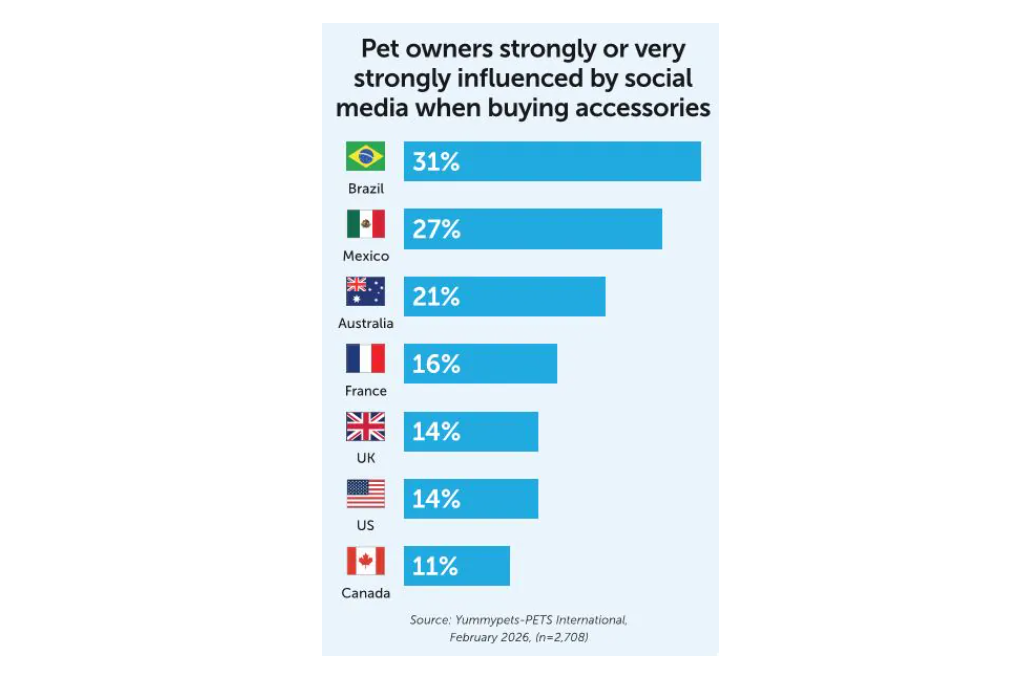
- Social media: 20%
- Traditional advertising: 14%
Regional differences:
- Brazil & Mexico: higher influence from family/friends (47%) and in‑store info (40–47%)
- Social media influence highest in Brazil (31%) and Mexico (27%)
- Canada least influenced by ads (7%) and social media (11%)
As smart accessories grow, consumers may increasingly seek expert guidance.
What This Means for the Pet Industry
- Accessories are shifting from occasional treats to essential lifestyle products
- Safety and durability now outweigh branding
- Online marketplaces—especially Amazon—are shaping global purchasing behavior
- High‑spending segments are growing, especially in the US and Australia
- Emerging categories (travel gear, cooling products, functional accessories) offer strong growth potential
- Retailers must balance price sensitivity with rising expectations for quality
What This Means for Pet Brands Working with OEM Partners
1. The Problems Brands Are Facing
- Consumers demand safer, more durable, more functional accessories
- Price sensitivity remains high in many markets
- Retailers need differentiated products to compete on Amazon
- Emerging categories require faster innovation cycles
2. What Pet Brands Now Need
- Cost‑efficient manufacturing to stay competitive online
- Flexible production for seasonal and niche categories
- Exclusive designs to stand out on marketplaces
- Reliable supply chains to support global distribution
3. How OEM Partners Create Value
OEM partners can support brands by offering:
- Cost control through optimized materials
- Rapid prototyping for new accessories
- Exclusive product development for retailer‑specific lines
- Stable supply chains for Amazon‑driven volume
- Functional outdoor gear expertise (harnesses, leashes, cooling products, travel accessories)
This is especially relevant as safety, durability, and performance become top purchase drivers.
Source: GlobalPETS